Thursday, 17 June 2010
Opening Keynote Address at APC Conference
Opening Keynote Address at APC Conference
By Aung San Suu Kyi, Nobel Prize Laureate. 31 August, 1995.
read on video to the NGO Forum on Women, Beijing, 31 August 1995
It is a wonderful but daunting task that has fallen on me to say a few words by way of opening this Forum, the greatest concourse of women (joined by a few brave men !) that has ever gathered on our planet. I want to try and voice some of the common hopes which firmly unite us in all our splendid diversity.
But first I would like to explain why I cannot be with you in person today. Last month I was released from almost six years of house arrest. The regaining of my freedom has in turn imposed a duty on me to work for the freedom of other women and men in my country who have suffered far more - and who continue to suffer far more - than I have. It is this duty which prevents me from joining you today. Even sending this message to you has not been without difficulties. But the help of those who believe in international cooperation and freedom of expression has enabled me to overcome the obstacles. They made it possible for me to make a small contribution to this great celebration of the struggle of women to mould their own destiny and to influence the fate of our global village.
The opening plenary of this Forum will be presenting an overview of the global forces affecting the quality of life of the human community and the challenges they pose for the global community as a whole and for women in particular as we approach the twenty-first century. However, with true womanly understanding the Convener of this Forum suggested that among these global forces and challenges, I might wish to concentrate on those matters which occupy all my waking thoughts these days : peace, security, human rights and democracy. I would like to discuss these issues particularly in the context of the participation of women in politics and governance.
For millenia women have dedicated themselves almost exclusively to the task of nurturing, protecting and caring for the young and the old, striving for the conditions of peace that favour life as a whole. To this can be added the fact that, to the best of my knowledge, no war was ever started by women. But it is women and children who have always suffered most in situations of conflict. Now that we are gaining control of the primary historical role imposed on us of sustaining life in the context of the home and family, it is time to apply in the arena of the world the wisdom and experience thus gained in activities of peace over so many thousands or years. The education and empowerment of women throughout the world cannot fail to result in a more caring, tolerant, just and peaceful life for all.
If to these universal benefits of the growing emancipation of women can be added the "peace dividend" for human development offered by the end of the Cold War, spending less on the war toys of grown men and much more on the urgent needs of humanity as a whole, then truly the next millenia will be an age the like to which has never been seen in human history. But there still remain many obstacles to be overcome before we can achieve this goal. And not least among these obstacles are intolerance and insecurity.
This year is the International Year for Tolerance. The United Nations has recognised that "tolerance, human rights, democracy and peace are closely related. Without tolerance, the foundations for democracy and respect for human rights cannot be strenghened, and the achievements of peace will remain elusive". My own experience during the years I have been engaged in the democracy movement in Burma has convinced me of the need to emphasize the positive aspects of tolerance. It is not enough simply to "live and let live" : genuine tolerance requires an active effort to try to understand the point of view of others ; it implies broad-mindedness and vision, as well as confidence in one's own ability to meet new challenges without resorting to intransigence or violence. In societies where men are truly confident of their own worth women are not merely "tolerated", they are valued. Their opinions are listened to with respect, they are given their rightful place in shaping the society in which they live.
There is an outmoded Burmese proverb still recited by men, who wish to deny that women too can play a part in bringing necessary change and progress to their society: "The dawn rises only when the rooster crows". But Burmese people today are well aware of the scientific reason behind the rising of dawn and the falling of dusk. And the intelligent rooster surely realizes that it is because dawn comes that it crows and not the other way round. It crows to welcome the light that has come to relieve the darkness of night. It is not the prerogative of men alone to bring light to this world: women with their capacity for compassion and self-sacrifice, their courage and perseverence, have done much to dissipate the darkness of intolerance and hate, suffering and despair.
Often the other side of the coin of intolerance is insecurity. Insecure people tend to be intolerant, and their intolerance unleashes forces that threaten the security of others. And where there is no security there can be no lasting peace. In its Human Development Report for last year, the UNDP noted that human security "is not a concern with weapons - it is a concern with human life and dignity". The struggle for democracy and human rights in Burma is a struggle for life and dignity. It is a struggle that encompasses our political, social and economic aspirations. The people of my country want the two freedoms that spell security: freedom from want and freedom from war. It is want that has driven so many of our young girls across our borders to a life of sexual slavery where they are subject to constant humiliation and ill-treatment. It is fear of persecution for their political beliefs that has made so many of our people feel that even in their own homes they cannot live in dignity and security.
Traditionally the home is the domain of the woman. But there has never been a guarantee that she can live out her life there safe and unmolested. There are countless women who are subjected to severe cruelty within the heart of the family which should be their haven. And in times of crisis when their menfolk are unable to give them protection, women have to face the harsh challenges of the world outside while continuing to discharge their duties within the home.
Many of my male colleagues who have suffered imprisonment for their part in the democracy movement have spoken of the great debt of gratitude they owe their womenfolk, particularly their wives, who stood by them firmly, tender as mothers nursing their newly born, brave as lionesses defending their young. These magnificent human beings who have done so much to aid their men in the struggle for justice and peace - how much more could they not achieve if given the opportunity to work in their own right for the good of their country and of the world?
Our endeavours have also been sustained by the activities of strong and principled women all over the world who have campaigned not only for my own release but, more importantly, for our cause. I cannot let this opportunity pass without speaking of the gratitude we feel towards our sisters everywhere, from heads of governments to busy housewives. Their efforts have been a triumphant demonstration of female solidarity and of the power of an ideal to cross all frontiers.
In my country at present, women have no participation in the higher levels of government and none whatsoever in the judiciary. Even within the democratic movement only 14 out of the 485 MPs elected in 1990 were women - all from my own party, the National League for Democracy. These 14 women represent less than 3 percent of the total number of successful candidates. They, like their male colleagues, have not been permitted to take office since the outcome of those elections has been totally ignored. Yet the very high performance of women in our educational system and in the managment of commercial enterprises proves their enormous potential to contribute to the betterment of society in general. Meanwhile our women have yet to achieve those fundamental rights of free expression, association and security of life denied also to their menfolk.
The adversities that we have had to face together have taught all of us involved in the struggle to build a truly democratic political system in Burma that there are no gender barriers that cannot be overcome. The relationship between men and women should, and can be, characterized not by patronizing behavior or exploitation, but by metta (that is to say loving kindness), partnership and trust. We need mutual respect and understanding between men and women, instead of patriarchal domination and degradation, which are expressions of violence and engender counter-violence. We can learn from each other and help one another to moderate the "gender weaknesses" imposed on us by traditional or biological factors.
There is an age old prejudice the world over to the effect that women talk too much. But is this really a weakness? Could it not in fact be a strength? Recent scientific research on the human brain has revealed that women are better at verbal skills while men tend towards physical action. Psychological research has shown on the other hand that disinformation engendered by men has far more damaging effect on its victims than feminine gossip. Surely these discoveries indicate that women have a most valuable contribution to make in situations of conflict, by leading the way to solutions based on dialogue rather than on viciousness or violence?
The Buddhist paravana ceremony at the end of the rainy season retreat was instituted by the Lord Buddha, who did not want human beings to live in silence [I quote] "like dumb animals". This ceremony, during which monks ask mutual forgiveness for any offence given during the retreat, can be said to be a council of truth and reconciliation. It might also be considered a forerunner of that most democratic of institutions, the parliament, a meeting of peoples gathered together to talk over their shared problems. All the world's great religions are dedicated to the generation of happiness and harmony. This demonstrates the fact that together with the combative instincts of man there co-exists a spiritual aspiration for mutual understanding and peace.
This forum of non-governmental organizations represents the belief in the ability of intelligent human beings to resolve conflicting interests through exchange and dialogue. It also represents the conviction that governments alone cannot resolve all the problems of their countries. The watchfulness and active cooperation of organizations outside the spheres of officialdom are necessary to ensure the four essential components of the human development, paradigm as identified by the UNDP: productivity, equity, sustainability and empowerment. The last is particularly relevant: it requires that "development must be by people, not only for them. People must participate fully in the decisions and processes that shape their lives." In other words people must be allowed to play a significant role in the governance of the country. And "people" include women who make up at least half of the world's population.
The last six years afforded me much time and food for thought. I came to the conclusion that the human race is not divided into two opposing camps of good and evil. It is made up of those who are capable of learning and those who are incapable of doing so. Here I am not talking of learning in the narrow sense of acquiring an academic education, but of learning as the process of absorbing those lessons of life that enable us to increase peace and happiness in our world. Women in their roles as mothers have traditionally assumed the responsibility of teaching children values that will guide them throughout their lives. It is time we were given the full opportunity to use our natural teaching skills to contribute towards building a modern world that can withstand the tremendous challenges of the technological revolution which has in turn brought revolutionary changes in social values.
As we strive to teach others we must have the humility to acknowledge that we too still have much to learn. And we must have the flexibility to adapt to the changing needs of the world around us. Women who have been taught that modesty and pliancy are among the prized virtues of our gender are marvelously equipped for the learning process. But they must be given the opportunity to turn these often merely passive virtues into positive assets for the society in which they live.
These, then, are our common hopes that unite us -- that as the shackles of prejudice and intolerance fall from our own limbs we can together strive to identify and remove the impediments to human development everywhere. The mechanisms by which this great task is to be achieved provided the proper focus of this great Forum. I feel sure that women throughout the world who, like me, cannot be with you join me now in sending you all our prayers and good wishes for a joyful and productive meeting.
I thank you.
By Aung San Suu Kyi, Nobel Prize Laureate. 31 August, 1995.
read on video to the NGO Forum on Women, Beijing, 31 August 1995
It is a wonderful but daunting task that has fallen on me to say a few words by way of opening this Forum, the greatest concourse of women (joined by a few brave men !) that has ever gathered on our planet. I want to try and voice some of the common hopes which firmly unite us in all our splendid diversity.
But first I would like to explain why I cannot be with you in person today. Last month I was released from almost six years of house arrest. The regaining of my freedom has in turn imposed a duty on me to work for the freedom of other women and men in my country who have suffered far more - and who continue to suffer far more - than I have. It is this duty which prevents me from joining you today. Even sending this message to you has not been without difficulties. But the help of those who believe in international cooperation and freedom of expression has enabled me to overcome the obstacles. They made it possible for me to make a small contribution to this great celebration of the struggle of women to mould their own destiny and to influence the fate of our global village.
The opening plenary of this Forum will be presenting an overview of the global forces affecting the quality of life of the human community and the challenges they pose for the global community as a whole and for women in particular as we approach the twenty-first century. However, with true womanly understanding the Convener of this Forum suggested that among these global forces and challenges, I might wish to concentrate on those matters which occupy all my waking thoughts these days : peace, security, human rights and democracy. I would like to discuss these issues particularly in the context of the participation of women in politics and governance.
For millenia women have dedicated themselves almost exclusively to the task of nurturing, protecting and caring for the young and the old, striving for the conditions of peace that favour life as a whole. To this can be added the fact that, to the best of my knowledge, no war was ever started by women. But it is women and children who have always suffered most in situations of conflict. Now that we are gaining control of the primary historical role imposed on us of sustaining life in the context of the home and family, it is time to apply in the arena of the world the wisdom and experience thus gained in activities of peace over so many thousands or years. The education and empowerment of women throughout the world cannot fail to result in a more caring, tolerant, just and peaceful life for all.
If to these universal benefits of the growing emancipation of women can be added the "peace dividend" for human development offered by the end of the Cold War, spending less on the war toys of grown men and much more on the urgent needs of humanity as a whole, then truly the next millenia will be an age the like to which has never been seen in human history. But there still remain many obstacles to be overcome before we can achieve this goal. And not least among these obstacles are intolerance and insecurity.
This year is the International Year for Tolerance. The United Nations has recognised that "tolerance, human rights, democracy and peace are closely related. Without tolerance, the foundations for democracy and respect for human rights cannot be strenghened, and the achievements of peace will remain elusive". My own experience during the years I have been engaged in the democracy movement in Burma has convinced me of the need to emphasize the positive aspects of tolerance. It is not enough simply to "live and let live" : genuine tolerance requires an active effort to try to understand the point of view of others ; it implies broad-mindedness and vision, as well as confidence in one's own ability to meet new challenges without resorting to intransigence or violence. In societies where men are truly confident of their own worth women are not merely "tolerated", they are valued. Their opinions are listened to with respect, they are given their rightful place in shaping the society in which they live.
There is an outmoded Burmese proverb still recited by men, who wish to deny that women too can play a part in bringing necessary change and progress to their society: "The dawn rises only when the rooster crows". But Burmese people today are well aware of the scientific reason behind the rising of dawn and the falling of dusk. And the intelligent rooster surely realizes that it is because dawn comes that it crows and not the other way round. It crows to welcome the light that has come to relieve the darkness of night. It is not the prerogative of men alone to bring light to this world: women with their capacity for compassion and self-sacrifice, their courage and perseverence, have done much to dissipate the darkness of intolerance and hate, suffering and despair.
Often the other side of the coin of intolerance is insecurity. Insecure people tend to be intolerant, and their intolerance unleashes forces that threaten the security of others. And where there is no security there can be no lasting peace. In its Human Development Report for last year, the UNDP noted that human security "is not a concern with weapons - it is a concern with human life and dignity". The struggle for democracy and human rights in Burma is a struggle for life and dignity. It is a struggle that encompasses our political, social and economic aspirations. The people of my country want the two freedoms that spell security: freedom from want and freedom from war. It is want that has driven so many of our young girls across our borders to a life of sexual slavery where they are subject to constant humiliation and ill-treatment. It is fear of persecution for their political beliefs that has made so many of our people feel that even in their own homes they cannot live in dignity and security.
Traditionally the home is the domain of the woman. But there has never been a guarantee that she can live out her life there safe and unmolested. There are countless women who are subjected to severe cruelty within the heart of the family which should be their haven. And in times of crisis when their menfolk are unable to give them protection, women have to face the harsh challenges of the world outside while continuing to discharge their duties within the home.
Many of my male colleagues who have suffered imprisonment for their part in the democracy movement have spoken of the great debt of gratitude they owe their womenfolk, particularly their wives, who stood by them firmly, tender as mothers nursing their newly born, brave as lionesses defending their young. These magnificent human beings who have done so much to aid their men in the struggle for justice and peace - how much more could they not achieve if given the opportunity to work in their own right for the good of their country and of the world?
Our endeavours have also been sustained by the activities of strong and principled women all over the world who have campaigned not only for my own release but, more importantly, for our cause. I cannot let this opportunity pass without speaking of the gratitude we feel towards our sisters everywhere, from heads of governments to busy housewives. Their efforts have been a triumphant demonstration of female solidarity and of the power of an ideal to cross all frontiers.
In my country at present, women have no participation in the higher levels of government and none whatsoever in the judiciary. Even within the democratic movement only 14 out of the 485 MPs elected in 1990 were women - all from my own party, the National League for Democracy. These 14 women represent less than 3 percent of the total number of successful candidates. They, like their male colleagues, have not been permitted to take office since the outcome of those elections has been totally ignored. Yet the very high performance of women in our educational system and in the managment of commercial enterprises proves their enormous potential to contribute to the betterment of society in general. Meanwhile our women have yet to achieve those fundamental rights of free expression, association and security of life denied also to their menfolk.
The adversities that we have had to face together have taught all of us involved in the struggle to build a truly democratic political system in Burma that there are no gender barriers that cannot be overcome. The relationship between men and women should, and can be, characterized not by patronizing behavior or exploitation, but by metta (that is to say loving kindness), partnership and trust. We need mutual respect and understanding between men and women, instead of patriarchal domination and degradation, which are expressions of violence and engender counter-violence. We can learn from each other and help one another to moderate the "gender weaknesses" imposed on us by traditional or biological factors.
There is an age old prejudice the world over to the effect that women talk too much. But is this really a weakness? Could it not in fact be a strength? Recent scientific research on the human brain has revealed that women are better at verbal skills while men tend towards physical action. Psychological research has shown on the other hand that disinformation engendered by men has far more damaging effect on its victims than feminine gossip. Surely these discoveries indicate that women have a most valuable contribution to make in situations of conflict, by leading the way to solutions based on dialogue rather than on viciousness or violence?
The Buddhist paravana ceremony at the end of the rainy season retreat was instituted by the Lord Buddha, who did not want human beings to live in silence [I quote] "like dumb animals". This ceremony, during which monks ask mutual forgiveness for any offence given during the retreat, can be said to be a council of truth and reconciliation. It might also be considered a forerunner of that most democratic of institutions, the parliament, a meeting of peoples gathered together to talk over their shared problems. All the world's great religions are dedicated to the generation of happiness and harmony. This demonstrates the fact that together with the combative instincts of man there co-exists a spiritual aspiration for mutual understanding and peace.
This forum of non-governmental organizations represents the belief in the ability of intelligent human beings to resolve conflicting interests through exchange and dialogue. It also represents the conviction that governments alone cannot resolve all the problems of their countries. The watchfulness and active cooperation of organizations outside the spheres of officialdom are necessary to ensure the four essential components of the human development, paradigm as identified by the UNDP: productivity, equity, sustainability and empowerment. The last is particularly relevant: it requires that "development must be by people, not only for them. People must participate fully in the decisions and processes that shape their lives." In other words people must be allowed to play a significant role in the governance of the country. And "people" include women who make up at least half of the world's population.
The last six years afforded me much time and food for thought. I came to the conclusion that the human race is not divided into two opposing camps of good and evil. It is made up of those who are capable of learning and those who are incapable of doing so. Here I am not talking of learning in the narrow sense of acquiring an academic education, but of learning as the process of absorbing those lessons of life that enable us to increase peace and happiness in our world. Women in their roles as mothers have traditionally assumed the responsibility of teaching children values that will guide them throughout their lives. It is time we were given the full opportunity to use our natural teaching skills to contribute towards building a modern world that can withstand the tremendous challenges of the technological revolution which has in turn brought revolutionary changes in social values.
As we strive to teach others we must have the humility to acknowledge that we too still have much to learn. And we must have the flexibility to adapt to the changing needs of the world around us. Women who have been taught that modesty and pliancy are among the prized virtues of our gender are marvelously equipped for the learning process. But they must be given the opportunity to turn these often merely passive virtues into positive assets for the society in which they live.
These, then, are our common hopes that unite us -- that as the shackles of prejudice and intolerance fall from our own limbs we can together strive to identify and remove the impediments to human development everywhere. The mechanisms by which this great task is to be achieved provided the proper focus of this great Forum. I feel sure that women throughout the world who, like me, cannot be with you join me now in sending you all our prayers and good wishes for a joyful and productive meeting.
I thank you.
Wednesday, 16 June 2010
WHO HAVE TO PLACE 2010-MAT TO WHOM?
WHO HAVE TO PLACE 2010-MAT TO WHOM?
Now,we have to hear again the voices of Boycott (or) Unboycott on 2010-election and so, we researched & presented the voices of oversea Burmese,U.S.A which will be boycott 2010-election with the hole Burma's national people's disires because 2010-election will military-salave officially our all national peoples with 2008-military-salaved constitution and Myanmar Junta Regimes would like to do their 2010-election with socalled people's desires to lie Internal-external democratic forces & countries for recognizing of global democratic countries &Untied Nations.
So,they have to try to get Artificial people's desires with Artificial politicians & politics,donars & donations,Kyaintphwint's social welfares & activities and thier strategy had always salaved all national peoples with guns & Neuclear weapons on tactics of persuading & frighteen to peoples(For examples!Useless carrot & stick policy) and they have used the holding sticks,back bones & salaved delegaters with salaved awards-cell phones,cells,garbaged meals for their 2010-election's democratic face-covers.Some have to serve 2010-election for garbaged meals with their poverty broken diganity anti-real political activities and so,very sad to hear those worest news and got also political lessons on Inter become form friends to enemies & form enemies to friends, based on political stands of all national peoples.
After our political prisoners' released from Myaungmya's prisons for fourteen yrs on March,1st,2002,we saw back our commarades & friends on many kinds of fields as old friends (or) new enemies with SPDC and once upon a time,our dearest cmmarades & friends had to serve faithfully Junta Regimes doing of night class on tears of our national people's laddy,girls & boys and some Junta Regime's armies & polices have to waits for paradies night class with night-allowences and all national peoples have to tear for garbaged meals among dirty lanes behind Artificial faced buildings but the greatest banks,compannies & hotels on black money of heroin existed on the city-roads and so,let to get knowledges that the greatest rebellions liked society's elites as Junta Regimes and they could co-operate on selfish-profits oppositing of all national people's profits and they used to serve for their war lords anti-people's profits(For examples!" Enoughed foods for salaves if Salave-lord's sastification".
On 8-8-88,Some strikers talked that U Nu placed mat while demostrative alerted but U Nu told back them that I placed mat but not for me and for peoples.Now,they have to place 2010-mat but not for them & peoples and for war lords.
Every boddy have roghts to place democratic mats for all Burma's national peoples but not for Junta Regimes and so, the persons who did for Junta Regimes will be burried together with war lords by us.
thanking you in anticipation;
best regards;
(U ThiHaTintSwe)
Patron for B.D.C,Wa-99336,U.S.A.
Ph;(509)5823261.
Now,we have to hear again the voices of Boycott (or) Unboycott on 2010-election and so, we researched & presented the voices of oversea Burmese,U.S.A which will be boycott 2010-election with the hole Burma's national people's disires because 2010-election will military-salave officially our all national peoples with 2008-military-salaved constitution and Myanmar Junta Regimes would like to do their 2010-election with socalled people's desires to lie Internal-external democratic forces & countries for recognizing of global democratic countries &Untied Nations.
So,they have to try to get Artificial people's desires with Artificial politicians & politics,donars & donations,Kyaintphwint's social welfares & activities and thier strategy had always salaved all national peoples with guns & Neuclear weapons on tactics of persuading & frighteen to peoples(For examples!Useless carrot & stick policy) and they have used the holding sticks,back bones & salaved delegaters with salaved awards-cell phones,cells,garbaged meals for their 2010-election's democratic face-covers.Some have to serve 2010-election for garbaged meals with their poverty broken diganity anti-real political activities and so,very sad to hear those worest news and got also political lessons on Inter become form friends to enemies & form enemies to friends, based on political stands of all national peoples.
After our political prisoners' released from Myaungmya's prisons for fourteen yrs on March,1st,2002,we saw back our commarades & friends on many kinds of fields as old friends (or) new enemies with SPDC and once upon a time,our dearest cmmarades & friends had to serve faithfully Junta Regimes doing of night class on tears of our national people's laddy,girls & boys and some Junta Regime's armies & polices have to waits for paradies night class with night-allowences and all national peoples have to tear for garbaged meals among dirty lanes behind Artificial faced buildings but the greatest banks,compannies & hotels on black money of heroin existed on the city-roads and so,let to get knowledges that the greatest rebellions liked society's elites as Junta Regimes and they could co-operate on selfish-profits oppositing of all national people's profits and they used to serve for their war lords anti-people's profits(For examples!" Enoughed foods for salaves if Salave-lord's sastification".
On 8-8-88,Some strikers talked that U Nu placed mat while demostrative alerted but U Nu told back them that I placed mat but not for me and for peoples.Now,they have to place 2010-mat but not for them & peoples and for war lords.
Every boddy have roghts to place democratic mats for all Burma's national peoples but not for Junta Regimes and so, the persons who did for Junta Regimes will be burried together with war lords by us.
thanking you in anticipation;
best regards;
(U ThiHaTintSwe)
Patron for B.D.C,Wa-99336,U.S.A.
Ph;(509)5823261.
Burma's disappearing teak forests
I live with my family in Hsipaw, home of the heart of the Shan State, the largest in Burma; it borders Thailand, Laos and China. We have an uncomplicated existence: we grow our own food, have sporadic electricity, and our water comes from the river.
The river runs by the back of my house. In days gone by it was a source of wealth: the clean water flowed past, supplying the local population, sometimes carrying flecks of gold. Many people would spend their days panning, collecting small particles of gold until enough was gathered to trade for other goods. It was a tough life at times, but we were always sustained by the land.
The river has long since given up its mineral wealth, but it's still an important meeting place. Alongside the waters, in a quiet spot behind an ancient bodhi tree, sits an old prayer house. It's made entirely from teak – it's a beautiful structure.
Teak is our traditional building material; it's a locally sourced timber, strong and long-lasting. Of all the world's teak, 70% comes from Burma. But today, for the average man wanting to repair his house, teak is surprisingly difficult to find and harder still to afford.
Prepared teak lasts for three generations, but in the case of this prayer house that interval has passed; the beams have reached the end of their natural life. You can tell by listening. Teak has a distinctive acoustic nature, but once the life has drained from it the sound becomes flat and dull.
Hsipaw, along with areas of Burma like Mawkmai and Namlan, was once known for its teak forests. Sadly this is no longer the case. It takes 100 years for teak to mature into timber, and many of the mature forests are no more.
Burma still has teak, but in all but the most inaccessible regions much has been sold. Logging has provided valuable funds for the military forces, serving to support their regime while at the same time exploiting the foundations of the land.
Harvested sensibly there would be ample to share, but this is not happening. Deforestation and all its associated ills are beginning to have their effect on the land; nutrient depletion and subsidence are phenomena that we are not used to encountering on such a scale.
There are international embargos against the sale of Burmese teak, but once it crosses the borders it is reclassified as non-Burmese. The sanctions do little, and although smuggling a tree sounds no easy feat, our neighbouring countries do little to enforce the embargos. There are rivers across the border to Thailand and China, and one boat can carry 34 tonnes.
Despite this, Burma is not an impoverished nation. It's possible for its people to be easily sustained by the natural resources of the land. As well as teak in the north, there is oil in the south; jade, sapphires and 90% of the world's rubies also come from Burma.
So we are blessed with the same curse that befalls many developing nations – mineral wealth that creates an ulterior motive for power. Resources in the soil of Burma have provided a financial backbone to the SPDC [State Peace and Development Council, the body of 12 military generals that rules the country]. Surrounding nations turn a blind eye for the sake of regional stability and financial gain. Until the political will exists to address these issues, the land that has provided us for centuries may not be able to support us for much longer.
• U Tin Naing, whose name has been changed, was talking to Pete Browne
The river runs by the back of my house. In days gone by it was a source of wealth: the clean water flowed past, supplying the local population, sometimes carrying flecks of gold. Many people would spend their days panning, collecting small particles of gold until enough was gathered to trade for other goods. It was a tough life at times, but we were always sustained by the land.
The river has long since given up its mineral wealth, but it's still an important meeting place. Alongside the waters, in a quiet spot behind an ancient bodhi tree, sits an old prayer house. It's made entirely from teak – it's a beautiful structure.
Teak is our traditional building material; it's a locally sourced timber, strong and long-lasting. Of all the world's teak, 70% comes from Burma. But today, for the average man wanting to repair his house, teak is surprisingly difficult to find and harder still to afford.
Prepared teak lasts for three generations, but in the case of this prayer house that interval has passed; the beams have reached the end of their natural life. You can tell by listening. Teak has a distinctive acoustic nature, but once the life has drained from it the sound becomes flat and dull.
Hsipaw, along with areas of Burma like Mawkmai and Namlan, was once known for its teak forests. Sadly this is no longer the case. It takes 100 years for teak to mature into timber, and many of the mature forests are no more.
Burma still has teak, but in all but the most inaccessible regions much has been sold. Logging has provided valuable funds for the military forces, serving to support their regime while at the same time exploiting the foundations of the land.
Harvested sensibly there would be ample to share, but this is not happening. Deforestation and all its associated ills are beginning to have their effect on the land; nutrient depletion and subsidence are phenomena that we are not used to encountering on such a scale.
There are international embargos against the sale of Burmese teak, but once it crosses the borders it is reclassified as non-Burmese. The sanctions do little, and although smuggling a tree sounds no easy feat, our neighbouring countries do little to enforce the embargos. There are rivers across the border to Thailand and China, and one boat can carry 34 tonnes.
Despite this, Burma is not an impoverished nation. It's possible for its people to be easily sustained by the natural resources of the land. As well as teak in the north, there is oil in the south; jade, sapphires and 90% of the world's rubies also come from Burma.
So we are blessed with the same curse that befalls many developing nations – mineral wealth that creates an ulterior motive for power. Resources in the soil of Burma have provided a financial backbone to the SPDC [State Peace and Development Council, the body of 12 military generals that rules the country]. Surrounding nations turn a blind eye for the sake of regional stability and financial gain. Until the political will exists to address these issues, the land that has provided us for centuries may not be able to support us for much longer.
• U Tin Naing, whose name has been changed, was talking to Pete Browne
Monday, 14 June 2010
Saturday, 12 June 2010
Burma Insight: Child Soldier Story (U Aye Myint - Guiding Star)
Please see the story of the child soldier reported by U Aye Myint, who is the Human Rights Lawyer working for protection of children, especially the plight of Burma Child Soldiers.
He said "Junta leaders are claiming that there is no child soldiers in Burma. Even in the state media, they say that there is no child soldiers which is different with reality. It is questionable that junta leaders are ignoring or just openly lying.
U Aye Myint said that "Let me tell you one story about 14 years old boy, Mg Aung Hlaing Phyo from Maw-La-Myaing, who is forcibly recruited as the child soldier, then forced him to work, and charge him since his only crime is he doesn't want to be a soldier".
For more information, please visit Burma Democratic Concern (BDC) at
http://www.bdcburma.org/
http://bdc-burma.blogspot.com/
twitter/ bdcburma
youtube/ bdcburma
facebook/ Burma Democratic Concern
myspace/ bdcburma
Burma Insight: Child Soldier Story (U Aye Myint - Guiding Star)
Please see the story of the child soldier reported by U Aye Myint, who is the Human Rights Lawyer working for protection of children, especially the plight of Burma Child Soldiers.
He said "Junta leaders are claiming that there is no child soldiers in Burma. Even in the state media, they say that there is no child soldiers which is different with reality. It is questionable that junta leaders are ignoring or just openly lying.
U Aye Myint said that "Let me tell you one story about 14 years old boy, Mg Aung Hlaing Phyo from Maw-La-Myaing, who is forcibly recruited as the child soldier, then forced him to work, and charge him since his only crime is he doesn't want to be a soldier".
For more information, please visit Burma Democratic Concern (BDC) at
http://www.bdcburma.org/
http://bdc-burma.blogspot.com/
twitter/ bdcburma
youtube/ bdcburma
facebook/ Burma Democratic Concern
myspace/ bdcburma
Friday, 11 June 2010
Suu Kyi Says Burmese Have Right Not to Vote
Burmese people have the right not to vote in the upcoming election, detained Burmese pro-democracy leader Aung San Suu Kyi told her lawyer on Friday. She also commented on US Sen. Jim Webb's support of the election.
“Daw Suu said that just as the people have the right to vote, they also have the right not to vote,” Suu Kyi's lawyer Nyan Win told The Irrawaddy shortly after meeting with her on Friday afternoon.
A woman sits under an iron fighting peacock sculpture, used in the National League for Democracy's (NLD) campaign in the 1990 general election, during a ceremony to mark the 20th anniversary of the election in which the NLD won 392 of 485 parliamentary seats at NLD Vice-Chairman Tin Oo's house in Rangoon on May 27. (Photo: Reuters)
Although her comment seems to allude to the possibility that she and her now-disbanded National League for Democracy (NLD) may call for a boycott of the planned election, Nyan Win declined to elaborate on her comment.
During a two-hour meeting that focused on legal issues relating to repairs to her home, Suu Kyi also said that she believed Webb's views on the election were his personal opinion only, and did not reflect his official position as chairman of the East Asian and Pacific Affairs Subcommittee of the Senate Committee on Foreign Relations.
Webb, a strong advocate of US engagement with the Burmese regime, canceled his scheduled visit to Burma earlier this month amid fresh reports that junta was trying to develop nuclear weapons.
On Wednesday, the Democratic lawmaker called for support of Burma's election, saying it was a step forward and that the junta would allow at least some opposition figures to stand for seats.
Nyan Win also said that Suu Kyi heard about Burma's alleged nuclear program, but she did not wish to make any comment on the issue at this point, as there was not enough information available.
Suu Kyi decided against her party re-registering under the regime's “unjust” election laws. The NLD was dissolved in May for its failure to meet the regime's party registration deadline.
Source: http://www.irrawaddy.org/article.php?art_id=18700 reposted by Burma Democratic Concern (BDC)
“Daw Suu said that just as the people have the right to vote, they also have the right not to vote,” Suu Kyi's lawyer Nyan Win told The Irrawaddy shortly after meeting with her on Friday afternoon.
A woman sits under an iron fighting peacock sculpture, used in the National League for Democracy's (NLD) campaign in the 1990 general election, during a ceremony to mark the 20th anniversary of the election in which the NLD won 392 of 485 parliamentary seats at NLD Vice-Chairman Tin Oo's house in Rangoon on May 27. (Photo: Reuters)
Although her comment seems to allude to the possibility that she and her now-disbanded National League for Democracy (NLD) may call for a boycott of the planned election, Nyan Win declined to elaborate on her comment.
During a two-hour meeting that focused on legal issues relating to repairs to her home, Suu Kyi also said that she believed Webb's views on the election were his personal opinion only, and did not reflect his official position as chairman of the East Asian and Pacific Affairs Subcommittee of the Senate Committee on Foreign Relations.
Webb, a strong advocate of US engagement with the Burmese regime, canceled his scheduled visit to Burma earlier this month amid fresh reports that junta was trying to develop nuclear weapons.
On Wednesday, the Democratic lawmaker called for support of Burma's election, saying it was a step forward and that the junta would allow at least some opposition figures to stand for seats.
Nyan Win also said that Suu Kyi heard about Burma's alleged nuclear program, but she did not wish to make any comment on the issue at this point, as there was not enough information available.
Suu Kyi decided against her party re-registering under the regime's “unjust” election laws. The NLD was dissolved in May for its failure to meet the regime's party registration deadline.
Source: http://www.irrawaddy.org/article.php?art_id=18700 reposted by Burma Democratic Concern (BDC)
Thursday, 10 June 2010
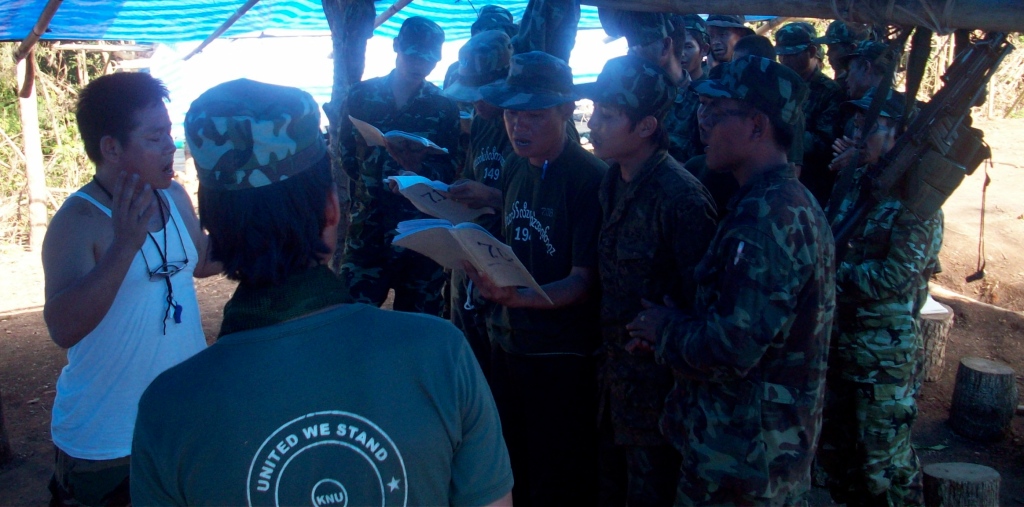
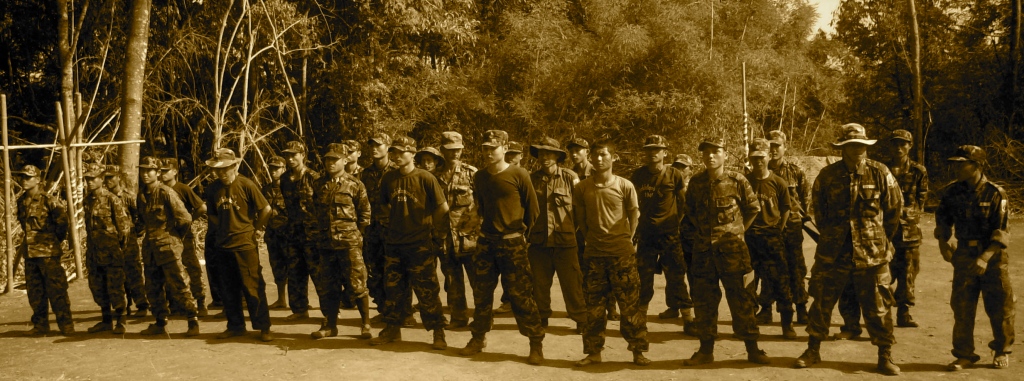
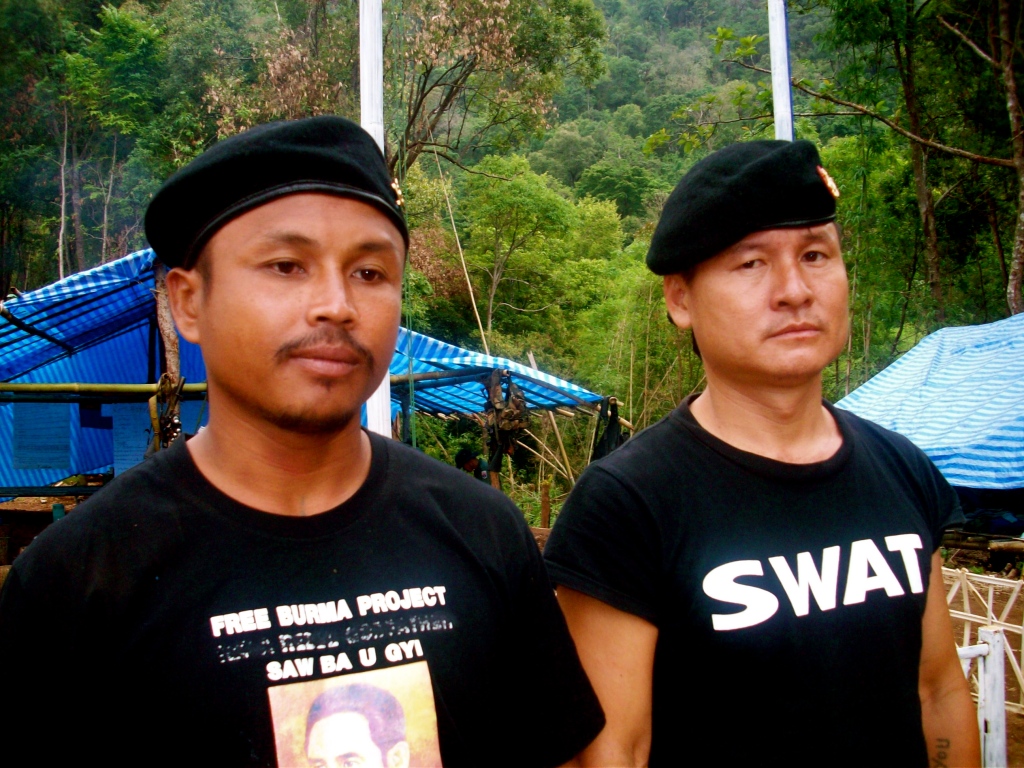
Htee Moo Brig6 Batt.201-Note to Karen around the world June 2010
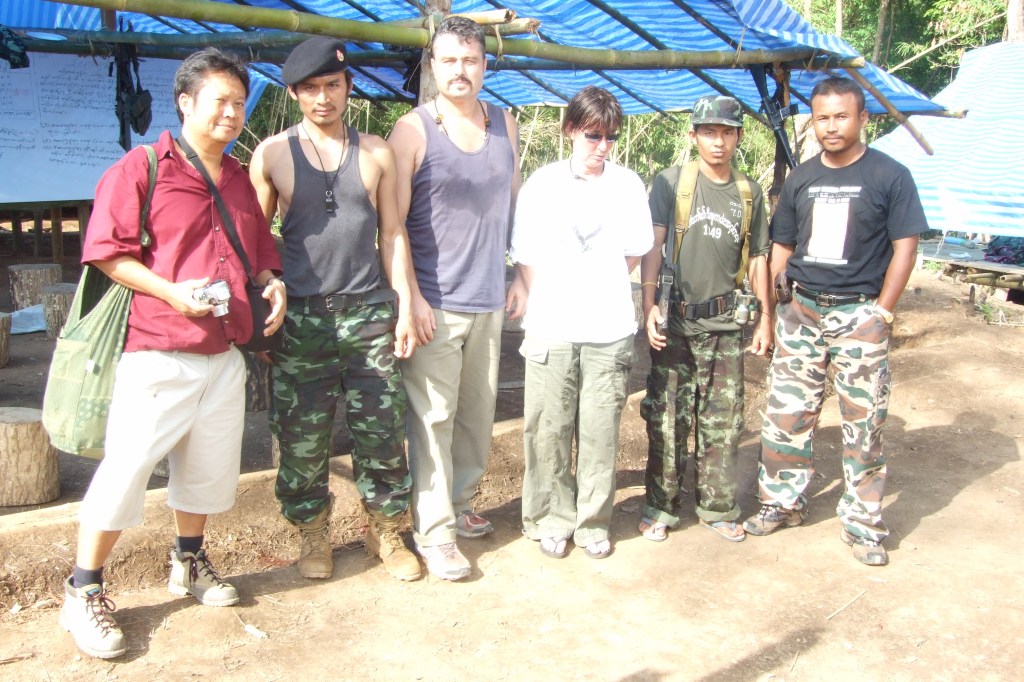
As far as I know “Burma Democratic Concern” director Myo Thein and Free Burma Project Border are the first Grass root Organisations they went into liberated Area to pass on Medicine and food to KNU and Alliance.
Here the note from Htee Moo Brig 6 Battallion 201
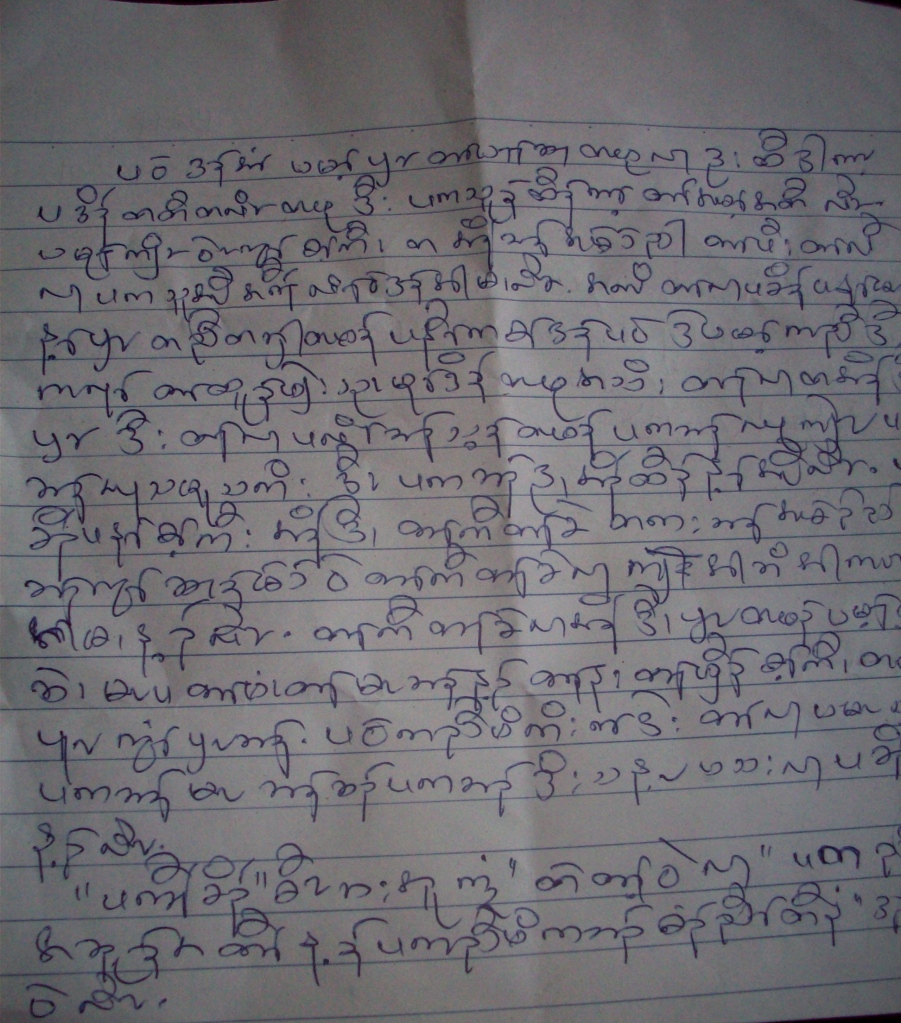

English translation by Free Burma Project Border
1.We are a resistance group of freedomfighters,who resists military Junta -unjust ruled and we like to change into justice goverment.
2.For our movement we need many things to go ahead for many places.
3.We have few supports from ourleaders KNU, but also we need to find ourselves for other support.
We have to find ourselves,as we are KNU soldiers because we need many necessary things.
Now our KNU leaders are facing many difficulties to support us.
6.If we don't continue our work for freedom fighter group,there will be many Human being problems which we will face till next generation.
So that, now we all Karen People,we work like this because it is our duty to be sacrified.
Our leader Saw Ba U Kyi said we shall decide our own political destiny.
Warm greetings to all Karen People around the world
Htee Moo Brig-6 Ma 201.officer of battalion office- liberated area
———————————-B.N.201 things needed urgent:
1.Solar ..collectable 62. Rechargable Dry Cell 1203. Walky Talky ICOM-IC-V84.Uniform4.T shirts Aug.12.————————–We adopt Brig 6 batt.201 and you can now donate to this account and we will pass the money to them.
For security reason we cannot post public this account,but you can be sure all donated money will go to the freedomfighters.
we need your support to keep things going on, For further details, send mail to Jutta2551@googlemail.com
Wednesday, 9 June 2010

Ambassador Denies Nuclear Allegations; UN to Investigate
Ambassador Denies Nuclear Allegations; UN to Investigate
Burma’s ambassador to Singapore has categorically rejected allegations in a recent media report that the country is developing a nuclear weapons program, even as the chief of the United Nations’ nuclear watchdog said that the agency is assessing information in the report.
In answer to a question about charges that Burma is seeking help from North Korea to build a nuclear weapons program, Ambassador Win Myint told the Singapore-based news Web site AsiaOne on Sunday that the allegations were “not true.”
“Some communities and societies … stereotype our country,” he said at the conclusion of the Shangri-La Dialogue security dialogue, held in Singapore on June 4-6. “If [we wanted to] know how to produce nuclear bombs, we need infrastructure and technology,” he added.
According to the report, which was produced by the Democratic Voice of Burma (DVB), an exiled Burmese news organization, and broadcast last week by the Al Jazeera news network, the Burmese regime has a clear intent to develop nuclear weapons, although its efforts are still at an early stage.
Burmese Deputy Defense Minister Maj-Gen Aye Myint was scheduled to attend the three-day Shangri- La Dialogue summit over the weekend, but canceled at the last minute, possibly to avoid answering questions about the DVB report. Win Myint was the only Burmese official in attendance.
The latest developments in Burma were reportedly discussed on the sidelines of the summit and in at least one closed-door session, but details of those discussions were not available.
Meanwhile, Yukiya Amano, the head of the Geneva-based International Atomic Energy Agency (IAEA), said on Monday that the agency is currently assessing the information in the report.
“If necessary, we will seek clarification from Myanmar[Burma],” Amano said on the first day of a meeting of the IAEA’s 35-member board.
Burma is a member of the IAEA and a party to the Nuclear Non-Proliferation Treaty. It is also a signatory to the Southeast Asia Nuclear-Weapon-Free Zone Treaty.
So far, Burma’s state-run media has not commented on the nuclear allegations, despite widespread interest inside the country.
Last month, Burmese Minister of Science and Technology U Thaung, who is believed to be overseeing the alleged nuclear weapons program, told visiting senior US diplomat Kurt Campbell that Burma agreed to comply with UN Security Council resolutions, but also had “the duty to maintain and protect national sovereignty.”
Source: http://www.irrawaddy.org/article.php?art_id=18652 reposted by Burma Democratic Concern (BDC)
Burma’s ambassador to Singapore has categorically rejected allegations in a recent media report that the country is developing a nuclear weapons program, even as the chief of the United Nations’ nuclear watchdog said that the agency is assessing information in the report.
In answer to a question about charges that Burma is seeking help from North Korea to build a nuclear weapons program, Ambassador Win Myint told the Singapore-based news Web site AsiaOne on Sunday that the allegations were “not true.”
“Some communities and societies … stereotype our country,” he said at the conclusion of the Shangri-La Dialogue security dialogue, held in Singapore on June 4-6. “If [we wanted to] know how to produce nuclear bombs, we need infrastructure and technology,” he added.
According to the report, which was produced by the Democratic Voice of Burma (DVB), an exiled Burmese news organization, and broadcast last week by the Al Jazeera news network, the Burmese regime has a clear intent to develop nuclear weapons, although its efforts are still at an early stage.
Burmese Deputy Defense Minister Maj-Gen Aye Myint was scheduled to attend the three-day Shangri- La Dialogue summit over the weekend, but canceled at the last minute, possibly to avoid answering questions about the DVB report. Win Myint was the only Burmese official in attendance.
The latest developments in Burma were reportedly discussed on the sidelines of the summit and in at least one closed-door session, but details of those discussions were not available.
Meanwhile, Yukiya Amano, the head of the Geneva-based International Atomic Energy Agency (IAEA), said on Monday that the agency is currently assessing the information in the report.
“If necessary, we will seek clarification from Myanmar[Burma],” Amano said on the first day of a meeting of the IAEA’s 35-member board.
Burma is a member of the IAEA and a party to the Nuclear Non-Proliferation Treaty. It is also a signatory to the Southeast Asia Nuclear-Weapon-Free Zone Treaty.
So far, Burma’s state-run media has not commented on the nuclear allegations, despite widespread interest inside the country.
Last month, Burmese Minister of Science and Technology U Thaung, who is believed to be overseeing the alleged nuclear weapons program, told visiting senior US diplomat Kurt Campbell that Burma agreed to comply with UN Security Council resolutions, but also had “the duty to maintain and protect national sovereignty.”
Source: http://www.irrawaddy.org/article.php?art_id=18652 reposted by Burma Democratic Concern (BDC)
Tuesday, 8 June 2010
Monday, 7 June 2010
Public interest in polls dims: political parties
New Delhi (Mizzima) – The Burmese people are losing interest in politics, according to parties approved by the Union Election Commission that are having difficulties on the campaign trail amid voter apathy.
The Union of Myanmar Federation of National Politics, Rakhine (Arakan) State National Force of Myanmar, Union Democratic Party, Diversity and Peace Party and the Democratic Party (Myanmar) were among the parties making the complaint.
“There is a 20-year gap between people and party politics so that we have difficulties in our organisational work such as dealing with people and dealing with other political parties,” Federation of National Politics liaison chief Ohn Lwin said.
“We have to say too much to people to [encourage them to] re-engage in politics as the idea that engaging in politics means languishing in jail, is deeply rooted …,” Wunthanu NLD (The Union of Myanmar) vice-chairman Ye Win said. “We have to explain too much to them on this issue especially in our campaigning in rural areas. The people are far too scared to join political parties and engage in politics.”
Democratic Party (Myanmar) general secretary Cho Cho Kyaw Nyein, 62, also said that the people were being intimidated and dared not step forward to participate in the political process to the extent that her party too was facing difficulties in motivating people.
Diversity and Peace Party secretary Nay Myo Wei also said that his party canvassers had to do a lot of persuading to hold people’s interest and put them at ease.
The UEC released a statement on May 29, which says parties will be deregistered unless they could not produce the prescribed membership numbers within 90 days from the date they receive permission to form a political party.
In applying for registration, the parties had to sign a pledge to organise a prescribed number for their party membership, ordered to be at least 1,000 for a national party and 500 for regional parties, within the prescribed period of 90 days.
They were also forced to coax colleagues and friends first to join so the parties could meet the quota within the prescribed or face dissolution, though they are not yet permitted to freely carry out campaigns.
This problem could be easily resolved if parties received the legal right to start their campaigns, Democratic Party Secretary Phyo Min Thein said.
“We are not the parties that can enjoy the backing by government and government-related organisations and individuals so that we will try to be a party representing the people. We have no problem with that,” he added. “But we need freedom for our party central organising committee’s … activities. The government and different levels of authorities should give us this freedom. If we get such freedom, we will have no problems.”
Apart from government-backed parties, other parties have operational difficulties, a political source said.
“We have much difficulty with our financing. It is impossible to complete our work in due course. For instance, we have to postpone work for about four or five days, even though it should be done today, because of our financial constraints,” Rakhine State National Force party chairman Aye Kyaing said.
“We are trying to run a campaign but we’re holding meetings on finance – who will contribute and how much,” Cho Cho Kyaw Nyein said. “We are even having difficulties meeting travel expenses.”
Nay Myo Wei said his party had campaign finance constraints.
Application for registration of a political party must be first initiated by 15 persons stating that they wish to form a party in accordance with the electoral laws by submitting their application to the UEC. The commission then scrutinises and processes these applications and informs the parties of the outcome.
After passing this first step, parties have to resubmit their party flags, seals and logos to the commission in an application signed by the parties’ chairman and vice-chairman, seeking permission for final registration. These branding items are put under the same commission scrutiny.
After being registered, the party must prove it has the minimum requirements for party membership within 90 days from the date of registration.
At least 42 parties have applied to the UEC, either re-registering, or setting up a new party. The commission announced yesterday it had granted registration to 28 parties to out of a total 32 applicants. The government has yet to announce the election date.
The following is a list of the 28 parties that have been recognised by the UEC and the dates on which they became fully registered political parties:
National Unity Party (April 29)
Lahu National Development Party (April 29)
Pa-O National Organisation date unavailable
Kokang Democracy and Unity Party (May 17)
Democractic Party (Myanmar) (May 20)
Kayan National Party (May 20)
Rakhine State National Force of Myanmar Party (May 20)
Karen People’s Party (May 21)
Wa National Unity Party (May 21)
Union Karen Nationalities League (May 21)
Ta-aung (Palaung) National Party (May 24)
All Mon State Democracy Party (May 24)
Democracy and Peace Party (May 24)
Shan Nationalities Democratic Party (May 26)
United Democratic Party (May 26)
88-Generation Student Youths (Union of Myanmar) (May 26)
National Political Alliances League date unavailable
Union of Myanmar Federation of National Politics (May 26)
Myanmar New Society Democratic Party (May 27)
Chin National Party (May 27)
Wunthanu NLD (Union of Myanmar) (May 28)
Mro or Khami National Solidartiy Organisation (May 28)
Modern People Party date unavailable
Union Democratic Party date unavailable
Diversity and Peace Party (June 1)
Chin Progressive Party (June 1)
Inn National Development Party (June 1)
Rakine Nationalities Progressive Party (June 1)
Source: http://www.mizzima.com/news/election-2010/4012-public-interest-in-polls-dims-political-parties-.html and reposted by Burma Democratic Concern (BDC)
The Union of Myanmar Federation of National Politics, Rakhine (Arakan) State National Force of Myanmar, Union Democratic Party, Diversity and Peace Party and the Democratic Party (Myanmar) were among the parties making the complaint.
“There is a 20-year gap between people and party politics so that we have difficulties in our organisational work such as dealing with people and dealing with other political parties,” Federation of National Politics liaison chief Ohn Lwin said.
“We have to say too much to people to [encourage them to] re-engage in politics as the idea that engaging in politics means languishing in jail, is deeply rooted …,” Wunthanu NLD (The Union of Myanmar) vice-chairman Ye Win said. “We have to explain too much to them on this issue especially in our campaigning in rural areas. The people are far too scared to join political parties and engage in politics.”
Democratic Party (Myanmar) general secretary Cho Cho Kyaw Nyein, 62, also said that the people were being intimidated and dared not step forward to participate in the political process to the extent that her party too was facing difficulties in motivating people.
Diversity and Peace Party secretary Nay Myo Wei also said that his party canvassers had to do a lot of persuading to hold people’s interest and put them at ease.
The UEC released a statement on May 29, which says parties will be deregistered unless they could not produce the prescribed membership numbers within 90 days from the date they receive permission to form a political party.
In applying for registration, the parties had to sign a pledge to organise a prescribed number for their party membership, ordered to be at least 1,000 for a national party and 500 for regional parties, within the prescribed period of 90 days.
They were also forced to coax colleagues and friends first to join so the parties could meet the quota within the prescribed or face dissolution, though they are not yet permitted to freely carry out campaigns.
This problem could be easily resolved if parties received the legal right to start their campaigns, Democratic Party Secretary Phyo Min Thein said.
“We are not the parties that can enjoy the backing by government and government-related organisations and individuals so that we will try to be a party representing the people. We have no problem with that,” he added. “But we need freedom for our party central organising committee’s … activities. The government and different levels of authorities should give us this freedom. If we get such freedom, we will have no problems.”
Apart from government-backed parties, other parties have operational difficulties, a political source said.
“We have much difficulty with our financing. It is impossible to complete our work in due course. For instance, we have to postpone work for about four or five days, even though it should be done today, because of our financial constraints,” Rakhine State National Force party chairman Aye Kyaing said.
“We are trying to run a campaign but we’re holding meetings on finance – who will contribute and how much,” Cho Cho Kyaw Nyein said. “We are even having difficulties meeting travel expenses.”
Nay Myo Wei said his party had campaign finance constraints.
Application for registration of a political party must be first initiated by 15 persons stating that they wish to form a party in accordance with the electoral laws by submitting their application to the UEC. The commission then scrutinises and processes these applications and informs the parties of the outcome.
After passing this first step, parties have to resubmit their party flags, seals and logos to the commission in an application signed by the parties’ chairman and vice-chairman, seeking permission for final registration. These branding items are put under the same commission scrutiny.
After being registered, the party must prove it has the minimum requirements for party membership within 90 days from the date of registration.
At least 42 parties have applied to the UEC, either re-registering, or setting up a new party. The commission announced yesterday it had granted registration to 28 parties to out of a total 32 applicants. The government has yet to announce the election date.
The following is a list of the 28 parties that have been recognised by the UEC and the dates on which they became fully registered political parties:
National Unity Party (April 29)
Lahu National Development Party (April 29)
Pa-O National Organisation date unavailable
Kokang Democracy and Unity Party (May 17)
Democractic Party (Myanmar) (May 20)
Kayan National Party (May 20)
Rakhine State National Force of Myanmar Party (May 20)
Karen People’s Party (May 21)
Wa National Unity Party (May 21)
Union Karen Nationalities League (May 21)
Ta-aung (Palaung) National Party (May 24)
All Mon State Democracy Party (May 24)
Democracy and Peace Party (May 24)
Shan Nationalities Democratic Party (May 26)
United Democratic Party (May 26)
88-Generation Student Youths (Union of Myanmar) (May 26)
National Political Alliances League date unavailable
Union of Myanmar Federation of National Politics (May 26)
Myanmar New Society Democratic Party (May 27)
Chin National Party (May 27)
Wunthanu NLD (Union of Myanmar) (May 28)
Mro or Khami National Solidartiy Organisation (May 28)
Modern People Party date unavailable
Union Democratic Party date unavailable
Diversity and Peace Party (June 1)
Chin Progressive Party (June 1)
Inn National Development Party (June 1)
Rakine Nationalities Progressive Party (June 1)
Source: http://www.mizzima.com/news/election-2010/4012-public-interest-in-polls-dims-political-parties-.html and reposted by Burma Democratic Concern (BDC)
Sunday, 6 June 2010
Saturday, 5 June 2010
Friday, 4 June 2010
Senator Jim Webb Postpones Burma Stop After Visits to Korea, Thailand
Press Releases
Senator Jim Webb Postpones Burma Stop After Visits to Korea, Thailand
June 3, 2010
Senator Webb, chairman of the Senate Foreign Relations Committee Subcommittee on East Asia and Pacific Affairs, issued the following statement today. He has just concluded visits to Korea and Thailand:
“News reports published today contain new allegations regarding the possibility that the Burmese government has been working in conjunction with North Korea in order to develop a nuclear program. From the initial accounts, a defecting officer from the Burmese military claims direct knowledge of such plans, and reportedly has furnished documents to corroborate his claims.
“It is unclear whether these allegations have substantive merit. However, given the fact that Assistant Secretary of State Kurt Campbell recently accused Burma of violating UN Security Council Resolution 1874 with respect to a suspected shipment of arms from North Korea, there are now two unresolved matters related to activities of serious concern between these two countries. Until there is further clarification on these matters, I believe it would be unwise and potentially counterproductive for me to visit Burma.
“I strongly believe that a continuation of dialogue between our two countries is important for the evolution of a more open governmental system and for the future strategic balance in Southeast Asia. However, a productive dialogue will be achievable only when these two matters are further clarified.
“In the interim period, I intend to strongly suggest to the President that he fulfill the requirements of Public Law 110-286 and immediately appoint a special envoy to address the entire range of issues regarding relations between the United States and Burma.”
http://webb.senate.gov/newsroom/pressreleases/2010-06-03-01.cfm
Senator Jim Webb Postpones Burma Stop After Visits to Korea, Thailand
June 3, 2010
Senator Webb, chairman of the Senate Foreign Relations Committee Subcommittee on East Asia and Pacific Affairs, issued the following statement today. He has just concluded visits to Korea and Thailand:
“News reports published today contain new allegations regarding the possibility that the Burmese government has been working in conjunction with North Korea in order to develop a nuclear program. From the initial accounts, a defecting officer from the Burmese military claims direct knowledge of such plans, and reportedly has furnished documents to corroborate his claims.
“It is unclear whether these allegations have substantive merit. However, given the fact that Assistant Secretary of State Kurt Campbell recently accused Burma of violating UN Security Council Resolution 1874 with respect to a suspected shipment of arms from North Korea, there are now two unresolved matters related to activities of serious concern between these two countries. Until there is further clarification on these matters, I believe it would be unwise and potentially counterproductive for me to visit Burma.
“I strongly believe that a continuation of dialogue between our two countries is important for the evolution of a more open governmental system and for the future strategic balance in Southeast Asia. However, a productive dialogue will be achievable only when these two matters are further clarified.
“In the interim period, I intend to strongly suggest to the President that he fulfill the requirements of Public Law 110-286 and immediately appoint a special envoy to address the entire range of issues regarding relations between the United States and Burma.”
http://webb.senate.gov/newsroom/pressreleases/2010-06-03-01.cfm
Thursday, 3 June 2010
Subscribe to:
Posts (Atom)